
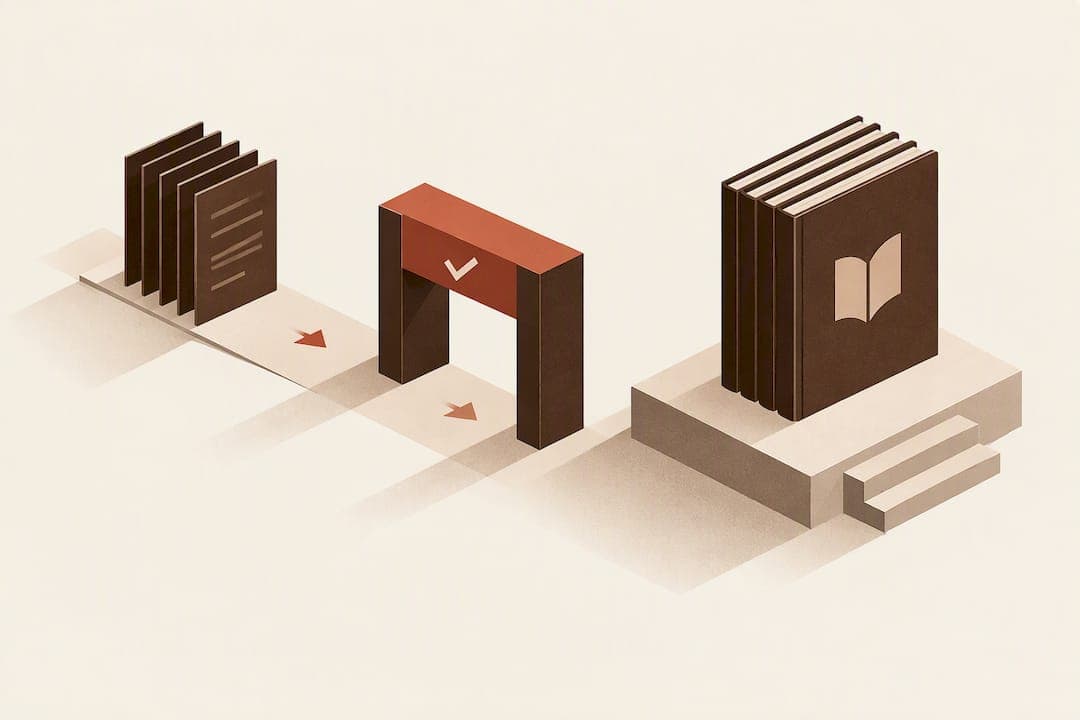
Yes: you can prepare store-ready EPUBs on a Chromebook. The fastest path is to draft in Google Docs with proper heading styles, export to DOCX, then run that file through a web-based EPUB exporter or import it directly into a formatting tool like Alhora for typesetting. Either way, validate the final EPUB with EpubCheck before you upload, and keep a PDF copy on hand for fixed-layout needs.
Key Takeaways
Creating store-ready EPUB ebooks on a Chromebook is possible with browser-based tools that support the entire formatting, validation, and export process.
| Point | Details |
|---|---|
| Use Google Docs for drafting | Format your manuscript in Google Docs with proper heading styles for easy export and conversion. |
| Leverage web-based tools | Convert and validate EPUB files using online converters and validators compatible with ChromeOS. |
| Follow a structured workflow | Apply headings, insert page breaks, generate a table of contents, then export and validate your EPUB before uploading. |
| Optimize images for EPUB | Resize and compress cover and interior images using web or Android apps, and add alt text for accessibility. |
| Use Alhora’s ChromeOS-compatible features | Import manuscripts, format, validate, and export EPUB files directly in the browser, simplifying Chromebook ebook production. |
Table of Contents
- Chromebook-friendly tools and a quick checklist
- Step-by-step workflow to format a manuscript on a Chromebook
- How to export EPUB from ChromeOS and validate it for stores
- Preparing covers and interior images on Chromebook
- Store upload checklist for KDP, Google Play Books and similar channels
- How Alhora fits this Chromebook workflow
- Troubleshooting common formatting issues encountered on Chromebooks when preparing eBooks
- Using Alhora's built-in AI assistant Inkia on Chromebook to assist with formatting
- Live collaboration features on Chromebook within Alhora during ebook formatting
- Optimizing eBook formatting specifically for Chromebook limitations and capabilities
- First-person perspective: practical trade-offs when formatting on a Chromebook
- Try Alhora for faster typesetting and validation
- FAQ
- Sources
Chromebook-friendly tools and a quick checklist
ChromeOS limits which apps you can install, but it doesn't limit what you can produce. A handful of web tools cover the entire formatting workflow without needing a Windows or Mac machine.
- Google Docs works as your master file: use Heading 1 for chapter titles and Heading 2 for subheads so your structure carries through to any export.
- Web-based EPUB converters and validators run entirely in Chrome, which matters because desktop-only apps like Adobe Digital Editions are not compatible with Chromebook hardware.
- Alhora runs on ChromeOS through the browser, letting you import a drafted manuscript and apply formatting without switching devices.
- Web image editors and select Android apps handle cover resizing and photo cleanup when you need more than Google Docs offers.
Skip any formatting tool that lists only Windows or Mac as supported platforms. If it needs a desktop installer, it won't run on your Chromebook no matter how good the reviews are.
Step-by-step workflow to format a manuscript on a Chromebook
Once your manuscript is drafted, the formatting pass follows a fixed order. Skipping steps here is what causes broken tables of contents and stray page breaks later.
- Apply Heading 1 to every chapter title and Heading 2 to subheads, consistently, from the first page to the last.
- Insert a page break after each chapter so the next chapter starts on a fresh screen rather than running on.
- Order your front matter correctly: title page, copyright, dedication, then chapter one, since stores use this section for sample previews.
- Insert a Table of Contents from Google Docs' built-in TOC tool, which pulls directly from your heading styles.
- Refresh the TOC after any structural edit instead of adjusting entries by hand, since manual edits break the links stores rely on.
- Scan for nested bullet lists, curly quotes pasted from other apps, and manual tab characters, all common sources of EpubCheck failures.
- Export your cleaned file as DOCX, then either run it through a web EPUB converter or import it into a formatter like Alhora.
- Keep a parallel PDF export for any content that depends on exact page layout, such as illustrated chapters or poetry collections.
Pro Tip: Turn on "Show nonprinting characters" in Google Docs before your final pass. Stray tabs and double spaces hide in plain text but show up as formatting errors once converted.
Nested lists and nonstandard characters deserve extra attention. According to TheBookDesigner's guide to Google Docs formatting, these elements are among the most frequent causes of broken exports when authors convert straight from Docs without an intermediate cleanup step.
How to export EPUB from ChromeOS and validate it for stores
EPUB is the format most stores want first, and for good reason. Google Play Books recommends EPUB 3.3 specifically for the best compatibility across its reading apps, and that recommendation reflects the current W3C standard, which defines the package document, navigation document, and packaging rules every valid EPUB must follow.
Getting from your Chromebook workflow to a validated file takes a few checks:
- Export your cleaned manuscript as EPUB through a web converter or a formatter that builds the file directly.
- Run the EPUB through an online EpubCheck validator before uploading anywhere; this is the same validation Google Play Books requires on submission.
- Open the file in a web reader and click through every TOC entry and chapter break to confirm navigation works.
- Check that your cover displays correctly and that lists and images render where you placed them.
Supply a PDF alongside your EPUB when your book depends on fixed layout, such as a heavily illustrated title or a book with complex tables. PDFs preserve exact pages but don't reflow on smaller screens, so reflowable EPUB stays the better default for standard fiction and nonfiction. Our guide to EPUB 3 versus EPUB 2 covers why the newer version reduces store rejections.
Preparing covers and interior images on Chromebook
Most stores want cover files in JPEG or PNG format at a minimum resolution, typically around 2560 pixels on the longest side, with file sizes kept reasonable to avoid upload timeouts.
- Resize and export covers using a web-based image editor or an Android photo app installed on your Chromebook.
- Keep interior images in JPEG or PNG format and compress large photos before embedding them, since oversized images bloat your EPUB file.
- Add alt text to every image for accessibility and store compliance.
- Size images to fit standard reading screens rather than full print resolution, which keeps file size manageable without losing clarity.
Our practical guide to images in EPUB walks through embedding rules in more detail if your book is image-heavy.
Store upload checklist for KDP, Google Play Books and similar channels
Each store has its own quirks, but the baseline requirements overlap enough that one clean, validated EPUB usually satisfies most of them.
- KDP accepts EPUB and generally handles validated files more cleanly than raw DOCX exports, which can introduce formatting drift during conversion.
- Google Play Books accepts both EPUB and PDF and prefers EPUB 3.3, and supplying both formats lets readers switch between reflowable text and original-page viewing.
- Google Play's file guidelines require your EPUB to pass EpubCheck and recommend including the front cover inside the EPUB package itself.
- Name your file with a clear identifier, such as your ISBN, to avoid processing issues during upload.
Before you upload anywhere, confirm your metadata is complete, your cover is embedded and sized correctly, your EPUB has passed validation, and your sample start point lands on chapter one rather than the title page. Our preflight checklist for Google Play Books covers this in more technical detail, and our guide to preparing EPUBs for Google Play walks through packaging and cover rules step by step.
How Alhora fits this Chromebook workflow
The steps above map directly onto how we built Alhora to work. We run as a book formatting studio across Mac, Windows, Linux, and ChromeOS, so the same import, typeset, and export flow applies whether you're on a laptop or a Chromebook.
- Import your drafted manuscript from Google Docs or DOCX directly into Alhora's browser-based workspace.
- Validate your manuscript against publishing standards as you format, catching issues before they reach EpubCheck.
- Apply typesetting features without leaving the browser.
- Export EPUB and print-ready PDF files through an integrated interface.
Our KDP-focused formatting page covers the Amazon-specific details if that's your primary store.
Troubleshooting common formatting issues encountered on Chromebooks when preparing eBooks
A few issues show up repeatedly when authors format on ChromeOS, and most trace back to the gap between what Google Docs displays and what an EPUB reader actually renders.
Broken tables of contents are the most common complaint. This usually happens when a TOC was built manually instead of generated from heading styles, or when a heading was edited after the TOC was inserted without a refresh. Fix it by deleting the TOC entry and reinserting it from your current heading structure.
Font substitution is another frequent surprise. Chromebooks don't carry the full font libraries that desktop operating systems do, so a custom font selected in Google Docs may render in a generic substitute once exported. Stick to standard, widely supported fonts for body text and reserve custom fonts for cover design only.
Image placement drift happens when photos inserted inline shift position after conversion. Anchoring images to their own paragraph, rather than wrapping text around them, keeps placement predictable across EPUB readers.
Finally, copied text from other documents often carries hidden formatting: inconsistent fonts, stray tracked-changes markup, or smart quotes that don't match your manuscript's style. Paste as plain text, then reapply your heading styles, to avoid carrying that baggage into your final export.

Using Alhora's built-in AI assistant Inkia on Chromebook to assist with formatting
Inkia, a built-in AI assistant, runs inside Alhora's browser workspace, so it's available on Chromebook the same way it is on other supported operating systems. Inkia flags formatting and proofreading issues as you work: inconsistent heading levels, stray characters that commonly break EPUB exports, and structural gaps like a missing chapter break.
What Inkia doesn't do matters just as much as what it does. It checks and flags issues, but it never writes or alters your creative content. That boundary keeps the editorial decisions in your hands while still catching the mechanical errors that eat up hours during manual proofing.
For Chromebook authors specifically, this matters because ChromeOS doesn't give you the same desktop proofing software ecosystem that Windows or Mac users have access to. Having that assistance built into the formatting tool itself, rather than requiring a separate installed application, keeps the whole workflow inside the browser.
Live collaboration features on Chromebook within Alhora during ebook formatting
Formatting a book rarely happens in isolation. Editors need to review structure, cover designers need to check how their work displays inline, and co-authors need to weigh in on layout decisions.
Alhora supports live collaboration directly in the browser, fitting with how Chromebooks are typically used: lightweight, often shared across a household or a small team, and reliant on cloud-based workflows rather than installed software. Because collaboration runs through the same browser session as the formatting work itself, a Chromebook user can review changes, leave input, and see updates in real time without exporting files back and forth.
This also solves a practical ChromeOS limitation: without a full desktop app ecosystem, Chromebook users have historically had to rely on clunky file-sharing workarounds to get a second set of eyes on formatting. Working inside a shared, browser-based session removes that extra step entirely.
Optimizing eBook formatting specifically for Chromebook limitations and capabilities
ChromeOS has real constraints: no native desktop app installs, limited local storage on many models, and a smaller library of publishing-specific software compared to Windows or Mac. Working around these constraints well is mostly about choosing tools built for the browser from the start.
File management is the first adjustment. Chromebooks route most files through Google Drive or local downloads rather than a traditional desktop file system, so a formatting workflow that depends on juggling multiple desktop applications and manual file transfers creates friction. A browser-based formatter that handles import, typesetting, and export in one place removes that friction.
Storage is the second constraint worth planning around. Many Chromebook models ship with limited local storage, so cloud-based tools that don't require large local installs or temporary file caches are a better fit than desktop software ported awkwardly into a browser shell.
Finally, Chromebooks support web applications and certain Android apps but not desktop-only software, which is why the tools you choose for cover editing, drafting, and formatting all need to confirm ChromeOS compatibility explicitly rather than assuming a "works on all platforms" claim covers Chromebook too.

First-person perspective: practical trade-offs when formatting on a Chromebook
My honest recommendation: build your workflow around browser tools from day one rather than fighting ChromeOS to run desktop software. Test every export on at least two readers before you assume it behaves the same as it did on a different machine.
— James
Try Alhora for faster typesetting and validation
If you're drafting on a Chromebook and want typeset, validated EPUBs without switching devices, we built Alhora to run the whole process in your browser: import, typeset, validate, and export, all in one workspace for creating and selling ebooks with AI. EPUB 3.3 is now the W3C standard every modern EPUB creator works against, and we validate against it as you format rather than after you've already uploaded.
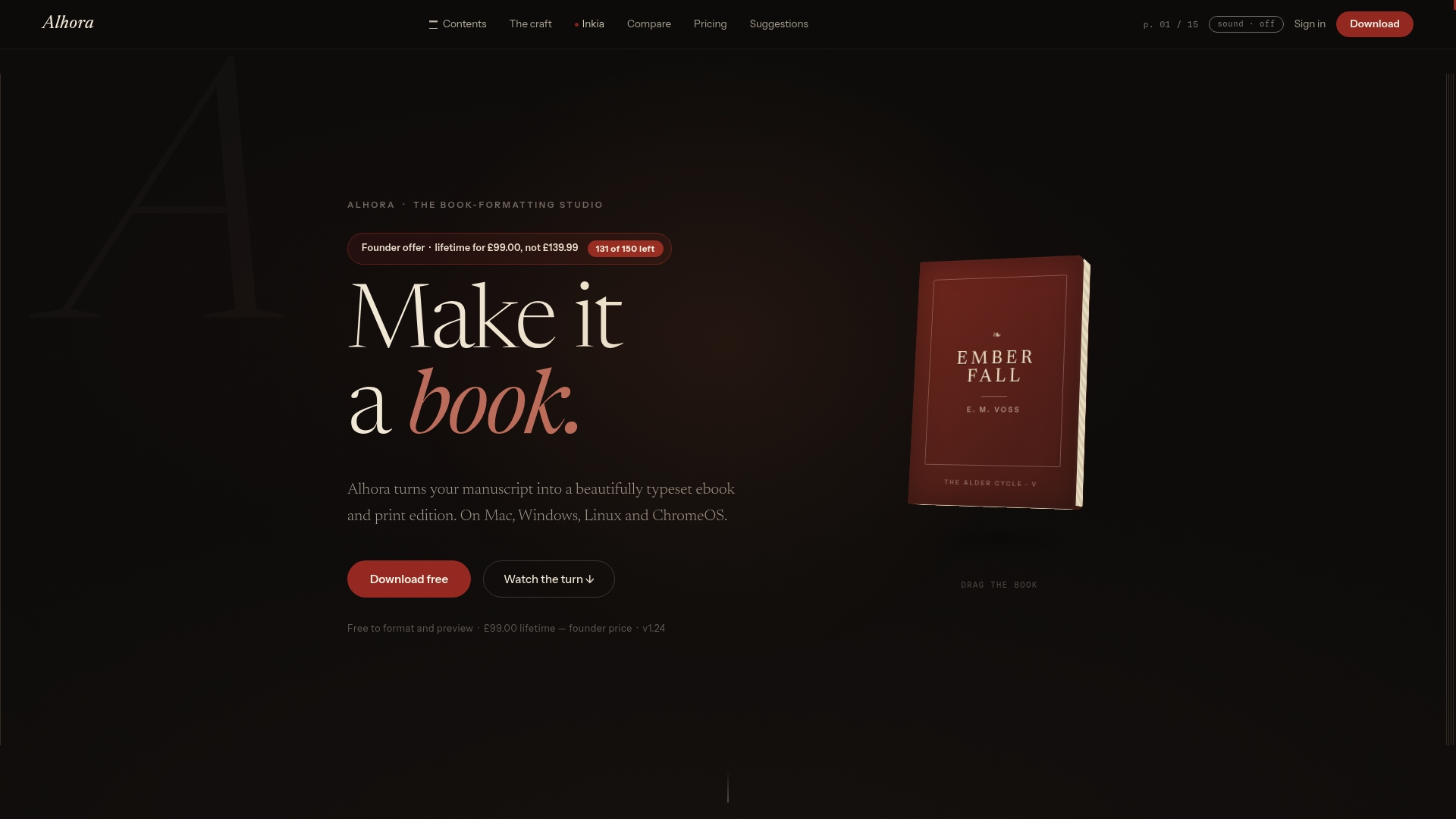
One license, $99 one-off, covers your formatting workflow on Alhora. Start your next manuscript there and export a store-ready EPUB straight from your Chromebook.
FAQ
What format should my ebook be in?
EPUB is the preferred format for most ebook stores because it reflows to fit any screen size. Google Play Books specifically recommends EPUB 3.3 for the best compatibility, and many stores also accept a companion PDF for fixed-layout content.
What format are Google ebooks?
Google Play Books accepts both EPUB and PDF files, and its guidelines list EPUB 3.3 as the preferred version for the smoothest reading experience across its apps. Supplying both formats lets readers choose between reflowable text and an exact-page view.
What is the best ebook formatting software?
The right choice depends on your platform and how much typesetting control you need. For Chromebook users specifically, browser-based tools or cross-platform software like Alhora that runs natively in ChromeOS tend to work better than desktop-only applications that won't install at all.
What format do Barnes and Noble use for ebooks?
Retailers generally request EPUB files for reflowable ebook content, matching the same industry-standard format most major stores rely on. Always check current submission guidelines directly with the retailer since file requirements can change.
Can I format an ebook entirely on a Chromebook?
Yes, using Google Docs for drafting combined with a web-based EPUB exporter and an online EpubCheck validator, or by importing your manuscript into a ChromeOS-compatible formatter. Chromebooks support web and Android apps rather than desktop installs, so confirming browser compatibility before choosing your tools saves time.
Sources
- EPUB files - Google Play Books Partner Center Help
- EPUB 3.3 — W3C Recommendation
- How can I read ebooks on a Chromebook? - COD Library FAQs