
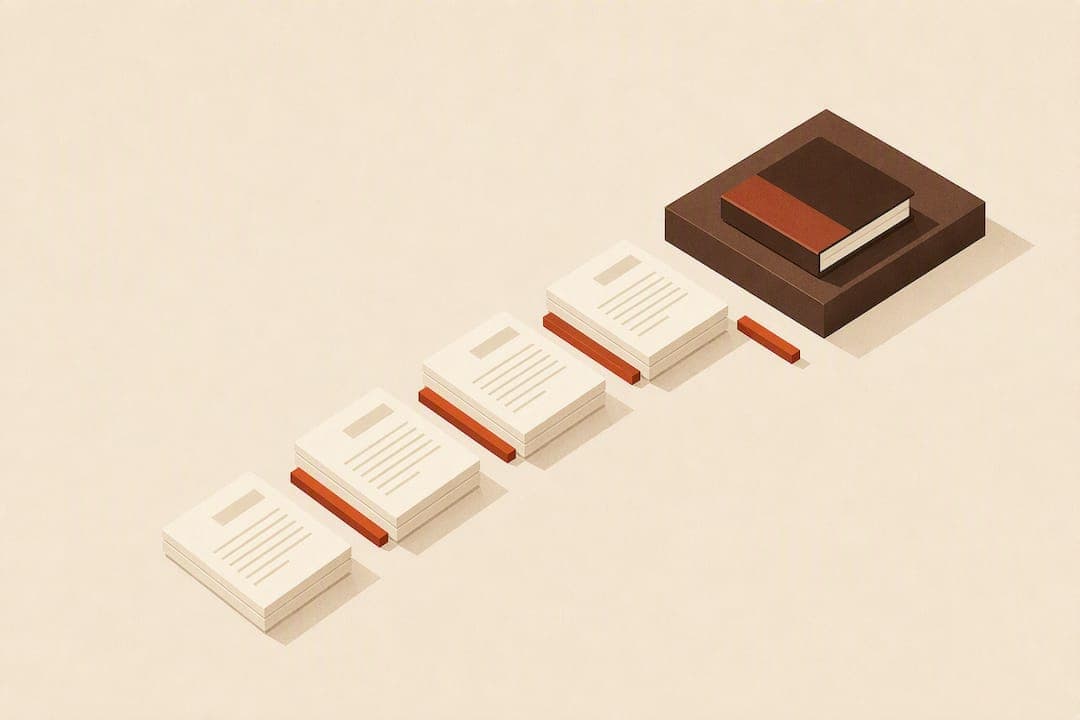
Draft2Digital formatting reliably turns a clean Word, RTF, or ODT manuscript into a reflowable ePub, plus a basic print PDF, without you touching code. It handles consistent chapter headings, embedded images, and Template Styles well, but it strips embedded fonts and complex page-level design. Use it for straightforward novels and text-heavy nonfiction. For illustrated books, fixed layouts, or tight typographic control, plan on a dedicated formatter, Kindlepreneur's layout guidance, or a studio like Alhora.
TL;DR:
- Draft2Digital preserves basic ebooks well but strips embedded fonts and complex layouts, making it suitable mainly for straightforward novels and nonfiction.
- Proper manuscript preparation requires consistent chapter styles, minimal manual formatting, and avoiding manual page breaks or special heading nesting to prevent table of contents issues.
- For images, embed them using Insert > Picture, set alignment to inline, and ensure high resolution to prevent pixelation across devices.
- Automated print PDFs work for simple projects, but precise control demands uploading preformatted PDFs, especially for complex layouts or illustrations.
- For projects needing advanced typography, illustrations, or accessibility features, dedicated software like Alhora offers better control and validation than automated converters.
Table of Contents
- How Do You Upload and Preview a Manuscript in Draft2Digital?
- File-Prep Rules That Keep Your Word Document Clean
- What Happens to Images, Quotes, and Poetry During Conversion?
- Which Template Styles and Typography Options Actually Work?
- What Should You Know About Print Margins, Gutters, and Trim Sizes?
- How Do You Fix the Most Common Draft2Digital Conversion Problems?
- A Formatter's Take on Speed Versus Control
- If You Need Production Control, Alhora Handles What Automated Converters Can't
- Quick Reference Links
- Sources
- FAQ
How Do You Upload and Preview a Manuscript in Draft2Digital?
The workflow is short, but the order matters. Skip a step and you'll be troubleshooting later instead of publishing.
- Set up your account and enter metadata first. Title, author name, series info, categories, and keywords all feed into how your book gets listed, so fill these in before you touch formatting.
- Pick the right file type. A clean .doc or .docx works for most manuscripts and gives Draft2Digital's converter the most to work with. RTF and ODT are also accepted. If you already have a preformatted EPUB or a print-ready PDF from another tool, upload that instead and skip the automated conversion entirely.
- Move to the Preview step. This is where you apply Template Styles, turn on Drop Caps, or switch to a Poetry template. These controls live inside the Preview screen, not the upload form, so don't go looking for them earlier.
- Let Draft2Digital auto-generate end matter. Title pages, copyright pages, and "also by" sections get created automatically in most cases. Only upload custom front or end matter when you need something the automated version can't produce, like a dedication with unusual formatting.
- Run a final checklist before publishing. Preview the table of contents, spot-check every embedded image, view the file on a couple of sample devices in the previewer, and if you're using print, order a physical proof before wide release.
Most formatting complaints trace back to skipping step 5. A five-minute scroll through the preview catches the majority of layout surprises before a reader ever does.
File-Prep Rules That Keep Your Word Document Clean
Draft2Digital's knowledge base is explicit about what it wants from a source file: consistent structure, minimal manual formatting, and no assumptions about page-level control. Get these right and the converter has almost nothing to guess at.
- Mark every chapter the same way, either with the Heading 1 style or a consistent bold, larger-font treatment. Mixing methods across chapters is the single most common cause of a broken table of contents.
- Skip the custom title page and copyright page unless you have a specific reason to override the automated versions Draft2Digital generates.
- Avoid embedded fonts entirely. The converter strips them because ereaders control their own default fonts, so a custom typeface you paid for will never survive the trip.
- Delete manual page breaks inside chapters, along with strings of empty paragraphs used to fake vertical spacing. Reflowable ePubs ignore fixed spacing anyway, so these just create odd gaps.
- Watch for unusual heading nesting, like a Heading 3 used for a chapter title because it "looked right" in Word. The converter reads heading levels literally, so inconsistent nesting confuses the generated navigation.
A quick cleanup pass in Word fixes most of this: select all, clear direct formatting, reapply your paragraph and heading styles from scratch, then use Find and Replace to hunt down double paragraph marks. It takes fifteen minutes and eliminates the majority of conversion surprises documented in Draft2Digital's own pocket guide to ebook layout. If you'd rather have another set of eyes clean up your prose before this step, a tool like AmmarAI's writing assistant can help tighten a manuscript before you touch formatting at all.
What Happens to Images, Quotes, and Poetry During Conversion?
Special content needs a little more care than plain prose, but the fixes are simple once you know them.
- Embed every image with Insert > Picture rather than pasting or dragging it in. Give repeated decorative images, like chapter-break ornaments, unique filenames each time they appear, since the converter can otherwise reuse the wrong file across chapters.
- Set images to align In line with text so they don't float unpredictably once the file reflows on different screen sizes.
- Aim for images with sufficient resolution to display clearly on most devices, avoiding pixelation on high-resolution screens.
- Create blockquotes with a narrow indent or the built-in Quote paragraph style, since the converter looks for that visual signal to format them correctly.
- For poetry, use a hard return at the end of each line inside a stanza and apply Heading 1 to poem titles, then select a Poetry template in the Preview step.
Pro Tip: If a book leans heavily on illustrations or a poetry collection with irregular stanza breaks, consider ordering a print-ready PDF or preformatted EPUB from a dedicated tool instead of trusting automated reflow to preserve your intended spacing.
Which Template Styles and Typography Options Actually Work?
Template Styles change fonts, spacing, and a handful of decorative touches like drop caps, and you apply them inside the Preview screen rather than at upload. Once you understand what they touch and what they don't, picking one gets a lot easier.
- Template Styles adjust paragraph spacing, font pairing, and chapter heading treatment across the whole manuscript at once.
- Embedded custom fonts get ignored no matter which template you choose. Most ereaders default to their own serif or sans-serif font regardless of what you specify, so don't design around a specific typeface.
- Drop caps work well on standard prose but can misbehave with unusual first-word capitalization or chapters that open mid-dialogue, so test before committing.
- Preview your chosen style across a few sample devices inside the Preview tool. What looks clean on a tablet screen sometimes looks cramped on a smaller phone display.
Simpler almost always survives conversion better than clever. A clean, standard template with no drop caps will look consistent everywhere; an elaborate one might look great on one device and broken on another.
What Should You Know About Print Margins, Gutters, and Trim Sizes?
Draft2Digital can generate a basic print PDF directly from a Word, RTF, or ODT file, which works fine for straightforward novels with no illustrations or complex layout. If your interior needs precise control, upload a preformatted, print-ready PDF instead and skip the automated print conversion.
- The inside margin, or gutter, needs extra room to account for binding. Too narrow and text disappears into the spine; Alhora's book margin calculator will work out safe gutter and trim margins for your specific trim size.
- Preview your chosen trim size before finalizing. A 5×8 layout reads very differently from a 6×9 one, and text that looks properly spaced in one can look cramped in the other.
- Keep print images at 300 DPI minimum. Web-resolution images that look fine in an ePub often turn blurry or pixelated once printed on paper.
- Always order a physical proof before releasing widely. A screen preview cannot show you gutter tightness, bleed problems, or how an image actually renders on paper, and Kindlepreneur's layout guide treats a printed proof as the last real checkpoint before publication.
How Do You Fix the Most Common Draft2Digital Conversion Problems?
Most conversion issues have a short, specific fix. Work through these in order before assuming something is fundamentally wrong with your file.
- Table of contents not generating correctly. Almost always caused by inconsistent chapter markers. Go back through your manuscript and apply one heading method everywhere, then reupload.
- Unexpected spacing or orphaned lines. Usually manual paragraph returns doing the job your paragraph style should be doing. Delete the extra returns and apply consistent styles instead.
- Missing or broken images. Check that every image was embedded through Insert > Picture rather than pasted as a link, and confirm repeated images each have a unique filename.
- Persistent problems after two or three attempts. Stop troubleshooting and upload a preformatted EPUB or PDF instead, or move the project to a dedicated formatter that gives you direct control over the file's structure.
Pro Tip: Keep a backup copy of your manuscript before each cleanup pass. Style stripping and Find-and-Replace cleanups are easy to overdo, and it's faster to revert than to rebuild formatting from scratch.
A Formatter's Take on Speed Versus Control
Automation earns its keep on a plain novel manuscript. Where it runs out of road is anything with illustrations, strict typography, or accessibility requirements, where page-level control actually matters. Before uploading anywhere, run this short list: unified chapter styles, embedded images with unique filenames, a clean TOC preview, and a physical proof ordered if you're printing. For complex projects, Alhora's book formatting software documents real-time validation and typesetting controls built for exactly the cases automated converters struggle with.
— James
If You Need Production Control, Alhora Handles What Automated Converters Can't
Alhora gives you the page-level control that automated tools like Draft2Digital's converter aren't built for, without switching between three different apps to get there.
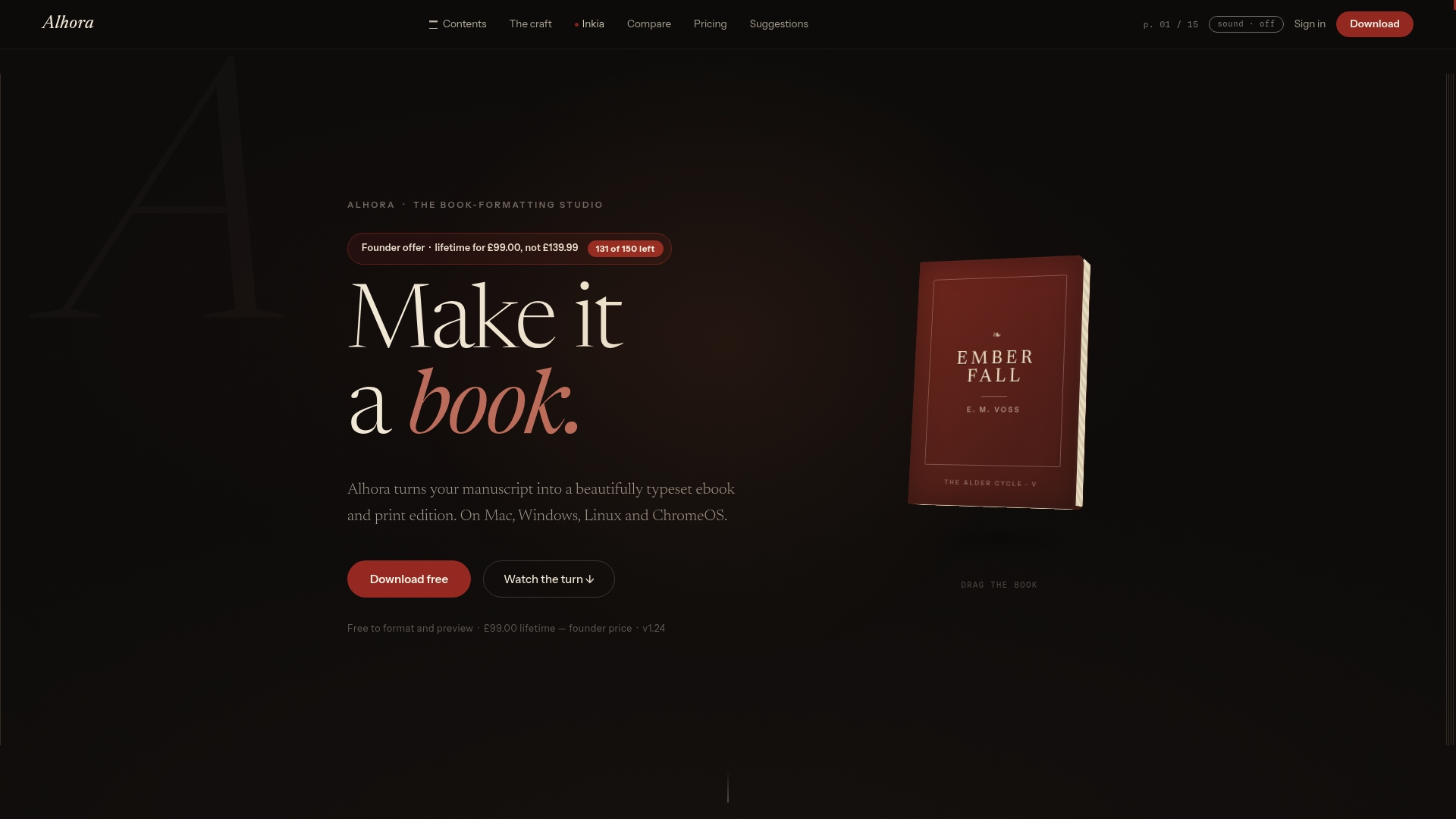
Once your project involves complex typography, an illustrated interior, an accessibility-audited EPUB, or a series that needs consistent formatting across five or six books, an automated converter starts fighting you at every step. Alhora's real-time validation checks your file against publishing standards as you work, its typesetting engine handles print-accurate exports for KDP, IngramSpark, and the major ebook stores, and its built-in assistant, Inkia, flags formatting issues without ever touching your actual prose. Batch series formatting means you set your styles once and apply them across an entire backlist instead of repeating the same manual fixes book after book. If you're on a Mac, there's a Mac-specific version built for that workflow; Windows authors have their own dedicated build as well. Visit the Alhora product page to see a demo or start exploring which plan fits your next project.
Quick Reference Links
- Draft2Digital's Knowledge Base for official style and upload guidance.
- Draft2Digital's Style Suggestions for Template Styles, drop caps, and poetry formatting.
- Kindlepreneur's Book Layout Guide for print margins, gutters, and trim-size decisions.
- Books2read for centralizing storefront links after publishing.
Sources
FAQ
How should an ebook be formatted?
A well-formatted ebook uses consistent Heading 1 styles for chapters, embedded (not linked) images, and no manual page breaks or excess paragraph returns, since reflowable ePubs adjust automatically to screen size.
Is Draft2Digital better than KDP for formatting?
Neither is strictly better since they serve different needs. Draft2Digital's automated formatter distributes to multiple stores at once from a single upload, while KDP's tools focus specifically on Amazon; many authors use Draft2Digital for wide distribution and upload separately to KDP for Amazon-specific control.
What is the best ebook formatting software?
The best choice depends on your project's complexity. Draft2Digital's built-in converter works well for standard novels and nonfiction, while illustrated books, fixed layouts, or accessibility-audited EPUBs call for dedicated formatting software like Alhora.
What are the formatting guidelines for KDP?
KDP formatting guidelines cover consistent heading styles for chapter recognition, embedded rather than linked images, and specific margin and gutter requirements for print editions, similar in spirit to Draft2Digital's own file-prep guidance but with Amazon-specific trim and file rules.
Will Draft2Digital strip my custom fonts?
Yes. Embedded fonts get removed during conversion because most ereaders default to their own built-in serif or sans-serif fonts regardless of what the file specifies.